
Before we build a profile for any game, someone has to decide it's worth building — and that decision doesn't come from a popularity chart. It comes from reading what players actually complain about.
We started by reading the competition's bad reviews
The most useful research we did wasn't about our own product at all. We read close to a hundred real reviews of the voice-control tools people already use for this, complaints included. No survey, no focus group — just one- and two-star reviews, which tend to be the most specific and the least careful about sounding reasonable.
The same problems came up again and again, in the players' own words:
- One person said they trained the software on their voice many times, and it still couldn't understand most of what they said.
- Someone with over 300 hours in Elite Dangerous wrote that the tool would just stop working in the middle of intense combat.
- Another said a command would fire if a mouse so much as clicked nearby, but it struggled to hear one spoken clearly.
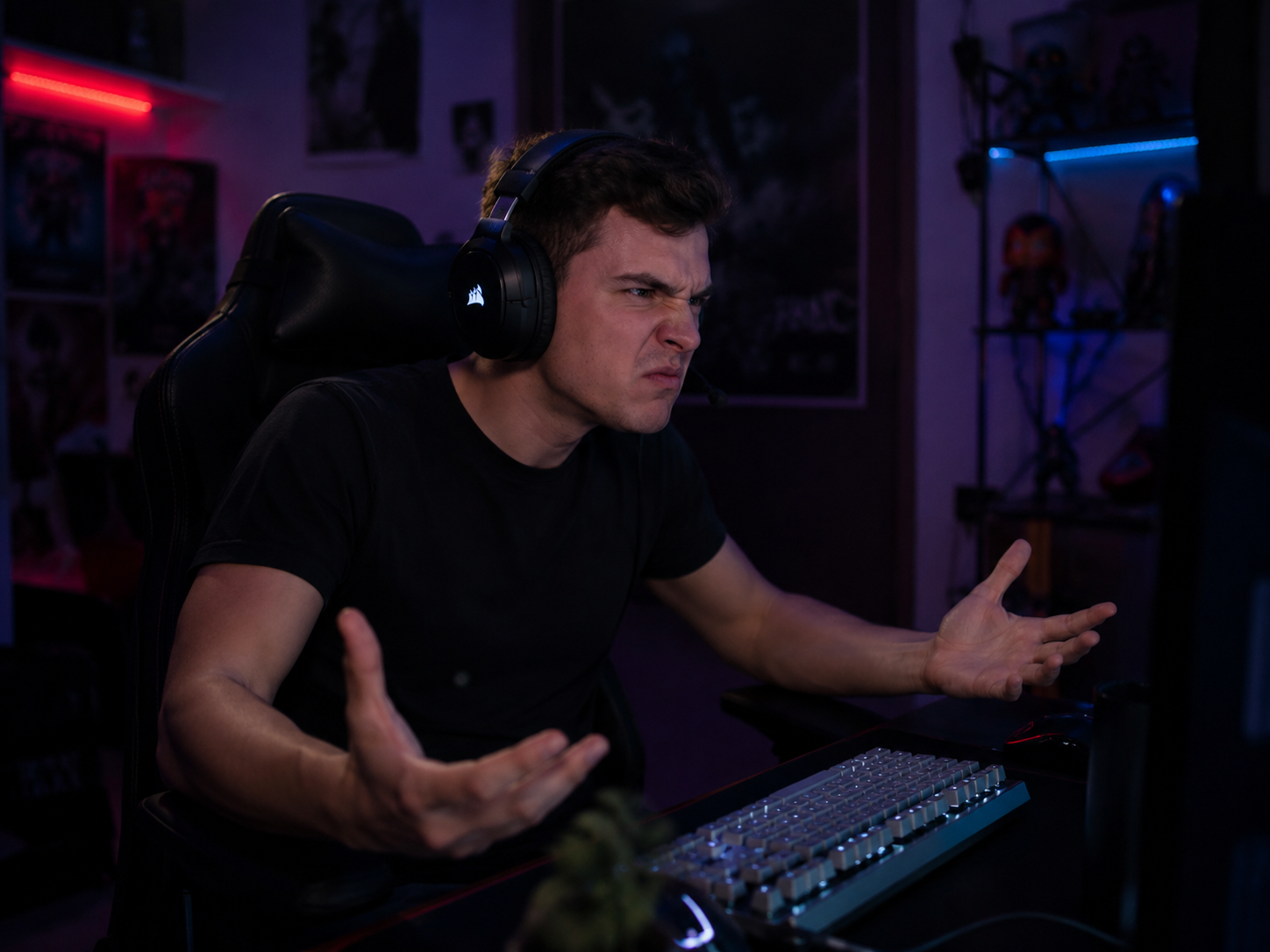
Those complaints shaped which games we picked first, and how we talk about the product. A tool that fires the wrong command in combat is worse than no tool at all, in a game where you need to react fast. So we looked for games where that exact problem would hurt the most.
Why Elite Dangerous, not the other flight sim
Elite Dangerous was one of the first games we picked. Its ship controls use a HOTAS — a joystick-and-throttle combo with dozens of buttons.
Even players who love that setup will tell you: many of those buttons never become automatic. You just don't use them enough to remember them without looking.
That's exactly where voice commands help — for actions you rarely need, but need instantly the moment you do.
A different, well-known flight sim didn't make our list, and we said so clearly at the time. Its players rely on their own macros with exact timing. That's a different kind of tool, built for a different kind of control than "say a word, get an action."
Trying to convince those players to switch would have meant competing on someone else's strength, not ours. At best, we'd have won over the players least convinced by that other approach — never the ones who chose it precisely for its exact-timing macros.
What this means for the next game
Every time someone asks why we don't support a given game yet, the answer runs through the same question we asked with Elite Dangerous: does that game have a real control problem voice can solve, or does it just have a lot of players? Those are different things, and only the first one decides.
That's the real test behind "which game gets support next." Not which game has the most players — which game has players actually fighting their own controls. That's who EchoControl is built for.
If your game isn't on the list yet, you don't have to wait: Custom Profile lets you build your own today.
See which games we already support, and try EchoControl on one of them yourself.